As Bermudians, being on, around or in the water is part of our way of life. It can be easy to forget that as well as being great fun, swimming, diving, boating and other recreational water sports present various dangers. Our Water Safety Guide will help you minimize the risks involved so that you can continue enjoy Bermuda's beautiful waters.
In The Water
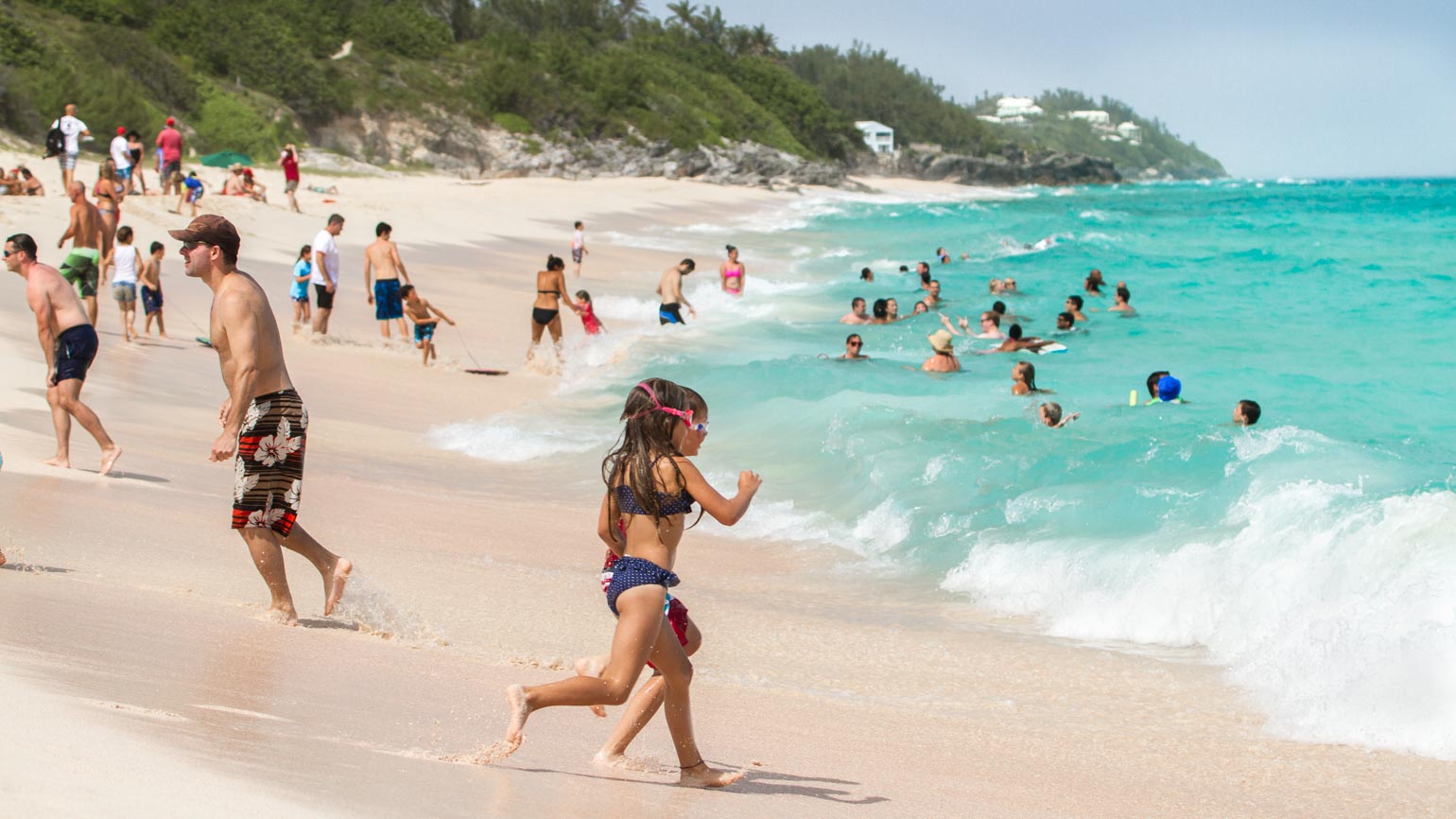
Swimming
Avoid swimming in rough weather.
If caught in a rip current or undertow
keep calm
Swim parallel to the shore in either direction to catch the inflow of water.
Do not fight a current until you are exhausted.
Stay afloat and await rescue. Saving yourself can be scary at first, but you’ll have a better chance if you keep your cool.
If in difficulty while swimming
call for help and wave one arm slowly from side to side to attract attention.
Don’t panic. Frantic struggling to stay afloat wastes precious energy and decreases buoyancy by releasing air trapped in your clothing.
If rescue doesn’t come right away, you can keep yourself afloat indefinitely.
Hold your breath for a short time with your head down and your body relaxed.
When you need more air, paddle slowly with your hands, kick easily with your feet and lift your head just far enough to exhale and take a new breath.
Return immediately to a face down, relaxed position to save energy and stay buoyant.
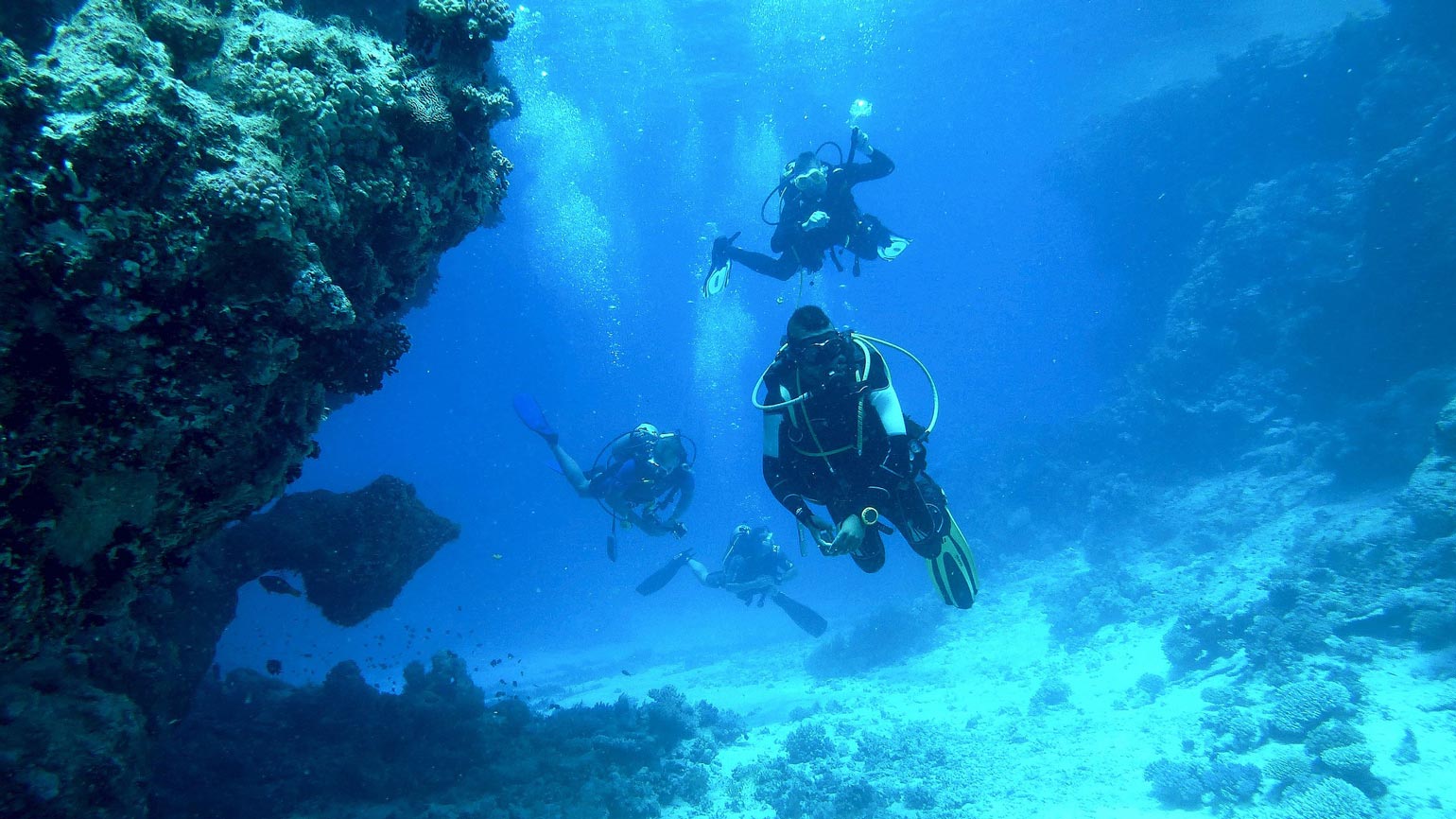
Always use the Buddy system when diving, never go alone!
Diving
The most important rule, applicable to both experienced and inexperienced divers, is never dive alone. Emergencies can always arise, and it is only when a person is thoroughly experienced that he can cope with the unexpected both on the surface and in the depths below.
Snorkel Diving
Train with an experienced instructor or with a group of very experienced divers.
Learn and practice life saving techniques. Your life or lives of your friends could depend on such knowledge.
Master basic swimming skills.
Scuba Diving
When a diver leaves the surface of the water he enters a completely foreign environment. Training to operate in this environment is vital.
Join a scuba club and get correct basic instruction.
Scuba diving is an exhilarating sport and if you are medically fit and properly trained you can enjoy safe, interesting diving in Bermuda and elsewhere in the world.
Swim Safe!
The main causes of drowning accidents are:
Inadequate supervision of young children playing in or near water.
Incorrect use of inflatable toys/floating aids such as rings, rafts and lilos.
Swimming or boating too far from shore.
Disregarding strong tides, rip currents or heavy surf.
Swimming out too far or swimming to an offshore boat, rock or buoy when the return trip may be beyond the swimmer’s capacity.
Underestimating distance in open water and overestimating swimming skill.
Swimming, boating or exploring alone, especially during periods of uncertain weather.
Cramp, the use of drugs, excess consumption of alcohol and the effect of cold and exposure.
Persons who are untrained or whose skill does not match their courage going to the rescue of others in distress.
Careless or unskilled use of watercraft.
Boats swept to sea due to strong winds, tides, engine failure or improper anchoring equipment.
Lack or shortage of life preservers, radio, flares, mirrors, signalling lights and other emergency equipment.
Giving Assistance
Since we live in a country surrounded by water, and so many residents participate in water sports, it is important to have a good working knowledge of resuscitation. Never jump in after a conscious, struggling person unless you’ve been thoroughly trained in lifesaving techniques.
Find a float! Improvise! Look around you for something to help you make a safe rescue.
On The Water
Water Skiing
The following are important rules for safe water skiing.
Two persons must be in the towing boat, one to run the boat and the other to watch the skier.
Both must be over 16 years of age.
It is forbidden to water ski within 200 feet of any foreshore.
Water skiers must keep clear of swimmers, boats, floats and other objects.
The water skier should wear a buoyant belt or life saving device.
Always file a Float Plan before heading out on the water!
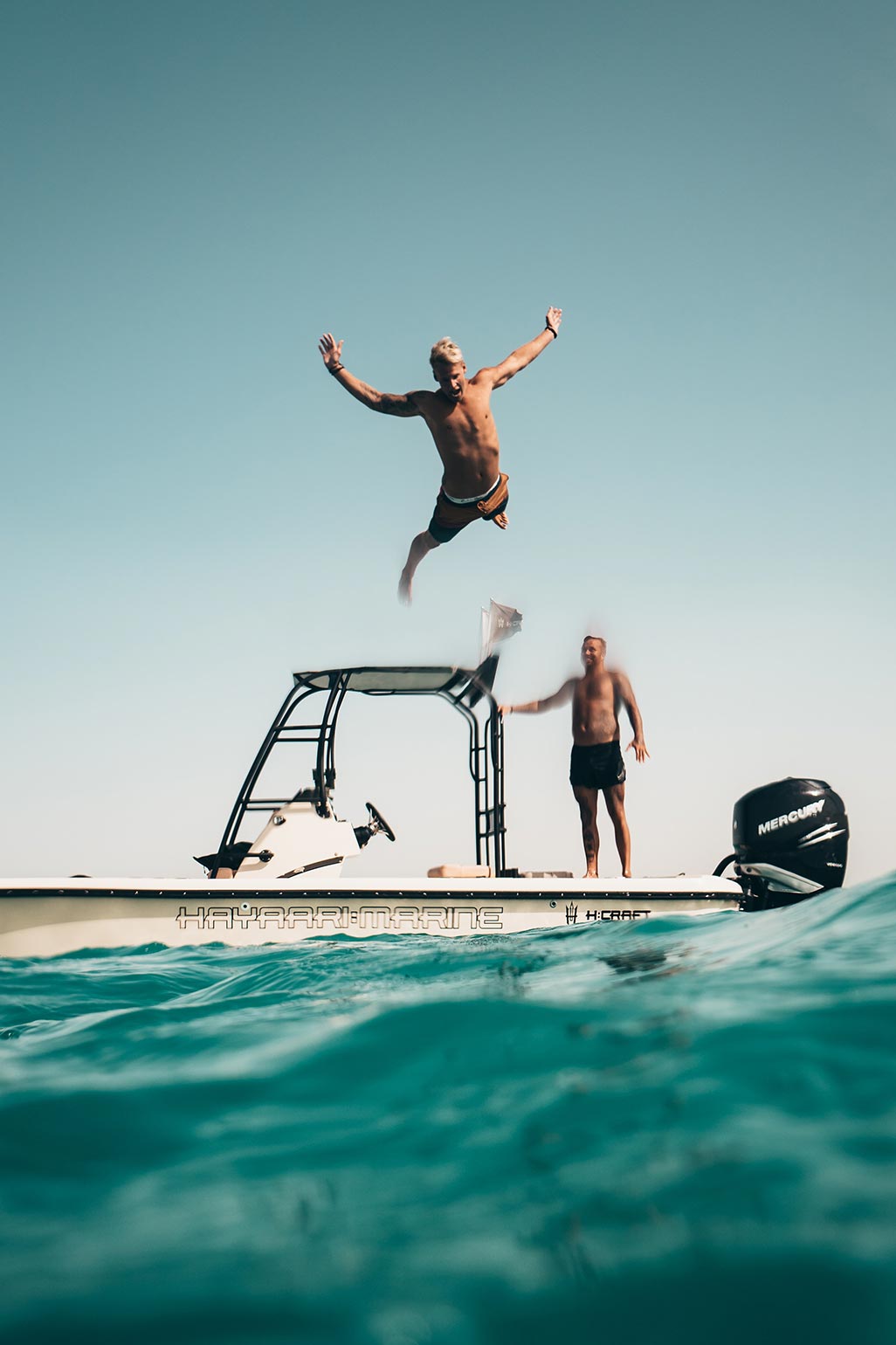
Boating
If you are on the water boating regularly, note the cloud formations and become aware of the wind changes and weather patterns. The weather can change without warning and may catch you off guard, so be prepared. Return to shore at the first sign of trouble, telling family and friends that you have done so. Meteorology and the study of weather is both fascinating and complex. Before venturing offshore read all you can about it, obtain the latest forecasts and ask other, more experienced boaters their opinion.
Before leaving the dock and while on board check the various forecasts available
the marine weather on 977-2 and current warnings in effect on 977-3.
Urgent weather warnings are broadcast by Harbour Radio on VHF channel 16, so keep your radio on this channel at all times.
Scheduled broadcasts are made throughout the day on channel 27 and 2582 Khz by Bermuda Radio, following an initial announcement on channel 16 and 2582 Khz. Such broadcasts consist of navigational warnings and comprehensive weather information.
A continuous weather broadcast can also be found on marine VHF weather channel 02.
Contact Bermuda Radio 297-1010 for further information.
Float Plan
The Bermuda Police Marine Section in Hamilton has available a float plan card with areas for a description of your boat and equipment aboard. Attached are sheets to be filled out before a boat trip. They cover the information about the trip, destination, intended time of return, etc.
Get a float plan and keep it in the same location at all times. A good place is near the telephone.
Tell your family/friends that if they haven’t heard from you by a certain time, that they should notify Bermuda Harbour Radio 297-1010 or Maritime Rescue 911.
DON’T come ashore and fail to let anyone know you’re back.
Grid charts of the water around Bermuda can also be obtained from the Marine Police. With these you can pin-point your destination.
The Search And Rescue Grid Chart and the float plan have been produced to assist boatmen. Details on their use are available from the Police Marine Section. Be sure that your boat carries all of the safety equipment required by law. Such equipment is deemed to be the minimum necessary to attract attention to yourself and to keep you alive until help arrives should your vessel sink or become disabled.
Before A Trip
Before Leaving The Dock:
Make sure you have more than enough fuel for a round trip. Also carry a spare can of gasoline.
See that there are life preservers for all hands and that they are in good condition and of an approved type.
As skipper of your boat you are responsible for your crew and passengers. Make sure you know the capabilities of your boat and never take chances with it.
Avoid going out when the weather is bad and winds are high. Poor conditions can get worse very quickly.
Reduce speed if the seas build up.
Don’t let people fool around.
Keep everybody inside the cockpit when the boat is underway.
No deckriding or standing on the gunwale. A sudden swerve can pitch a passenger into the water.
Non-swimmers should stay near the centre of the boat even in large inboards.
When you’re out in your boat, and everything is just fine, don’t you often have the urge to wave a friendly greeting, or blink a cheery light at that plane overhead? DON’T! Your greeting can too easily be thought a signal of distress by the plane’s crew and without you knowing it, you might set a tremendous rescue operation in motion. Many times, search and rescue personnel have been sent out on wild goose chases just through a simple misunderstanding. Laws concerning the operation of pleasure boats are becoming stricter and are being enforced by local authorities as never before. They are designed to protect the enjoyment and safety of the boating public against negligent and reckless operators. The laws now read somewhat like this; “A person who navigates any craft at such a speed or in a manner to constitute a danger to other persons is liable to punishment by a fine or imprisonment or both at the discretion of the court”.
Rescue
Bermuda Radio is the Rescue Co-ordination Centre for this area of the Atlantic and liaises with Coast Guards in the United States, Canada and the United Kingdom on matters of vessel safety and search and rescue. Reports of a vessel overdue, or any other type of marine emergency are investigated by Bermuda Radio.
Should a search and rescue operation be needed, rescue vessels from the Department of Marine and Ports, the Bermuda Police Marine Section and other government and private craft can be called upon to assist. It must be understood that any search and rescue operation involves a great deal of effort and expense, and often places the lives of those persons searching at risk.
It is essential that when you go out in your boat you tell someone else where you are going, for how long and who else is on board.
This provides searchers with a clear picture of what they are looking for and where to begin searching. Never take chances with the weather and place yourself in a position where you and your boat’s abilities might be exceeded while offshore. Storm conditions may not only overwhelm your boat, but in cases of severe weather, may make a rescue attempt impossible until such time as conditions improve.
ONE NAUTICAL MILE = 1.15 STATUTE MILES = 1.85 KILOMETRES
Safety Regulations
Motor, Sail & Personal Watercraft
Motor Boats Includes every craft plying the waters of these Islands propelled by internal combustion engines or electric motors.
Sail Boats A sail boat is any boat using sails as its primary method of propulsion.
Personal Water Craft Small, agile boats powered by inboard jet pump mechanisms.
1993 Marine Board (Safety) Regulations
The Principal Provisions
The regulations specify the minimum safety equipment that has to be carried on any boat except:
When at its Normal Mooring with no person on board.
Which is solely propelled by oars or paddles while in inshore waters and does not exceed 10 feet.
Inshore Waters
All enclosed waters south of a line between Commissioner’s Point and Cobbler’s Cut: Mangrove Bay, Ely’s Harbour & Scaur, Harrington Sound, Flatts Inlet, Castle Harbour, Ferry Reach, St. George’s Harbour, Coot Pond, Burchall’s Cove, Devonshire Bay and Hungry Bay.
Required Safety Equipment
* Signifies Approved Type
Type
Inshore
Offshore
Boats 20' or Less
1 Life jacket for each person *
2 Oars/Paddles
1 Bailer/Manual Bilge Pump
1 Anchor, 3’ chain, 100’ Rope
1 Horn
1 Flash Light
3 Red Flares *
3 Red Rockets *
3 Orange Smoke *
1 Dye Marker *
1 Mirror
1 Fire Extinguisher *
Boats 20' to 40'
1 Life jacket for each person *
2 Oars/Paddles
1 Bailer/Manual Bilge Pump
1 Anchor, 3’ chain, 200’ Rope
1 Horn
1 Flash Light
1 Life Buoy + 50 Line *
3 Red Flares
3 Red Rockets *
3 Orange Smoke *
1 Dye Marker *
1 Mirror
1 Fire Extinguisher *
Boats over 40'
1 Life jacket for each person *
2 Oars/Paddles
1 Bailer/Manual Bilge Pump
1 Anchor, 3’ chain, 200’ Rope
1 Horn
1 Flash Light
1 Life Buoy + 50 Line *
1 Additional Bailer (2 total)
1 Manual Bilge Pump
1 Additional Life Buoy and Line (2 total) *
1 Additional Fire Extinguisher (2 total) *
3 Red Flares
3 Red Rockets *
3 Orange Smoke *
1 Dye Marker *
1 Mirror
1 Fire Extinguisher *
Jet Ski's
1 Life jacket for each person *
1 Fire Extinguisher
1 Sound Producing Device
1 Flash Light
1 Life Buoy + 50 Line *
30’ Line/Tow Rope
1 Combined Daylight Smoke/Night Flare
Radio Equipment (VHF)
Must be carried by all boats proceeding seaward of:
Make sure your mail gets to its destination. Our handy list gives you easy access to all Bermuda postal codes, find your street address and get the code.
We spoke with Chef Michiko Campbell who shared with us his hopes and dreams and we even got our hands on his secret recipe for delicious Bermuda Baked Fish!